
Blog
Hyperpigmentation vs Melasma. What's the Difference?
July 23, 2026
Melasma & Hyperpigmentation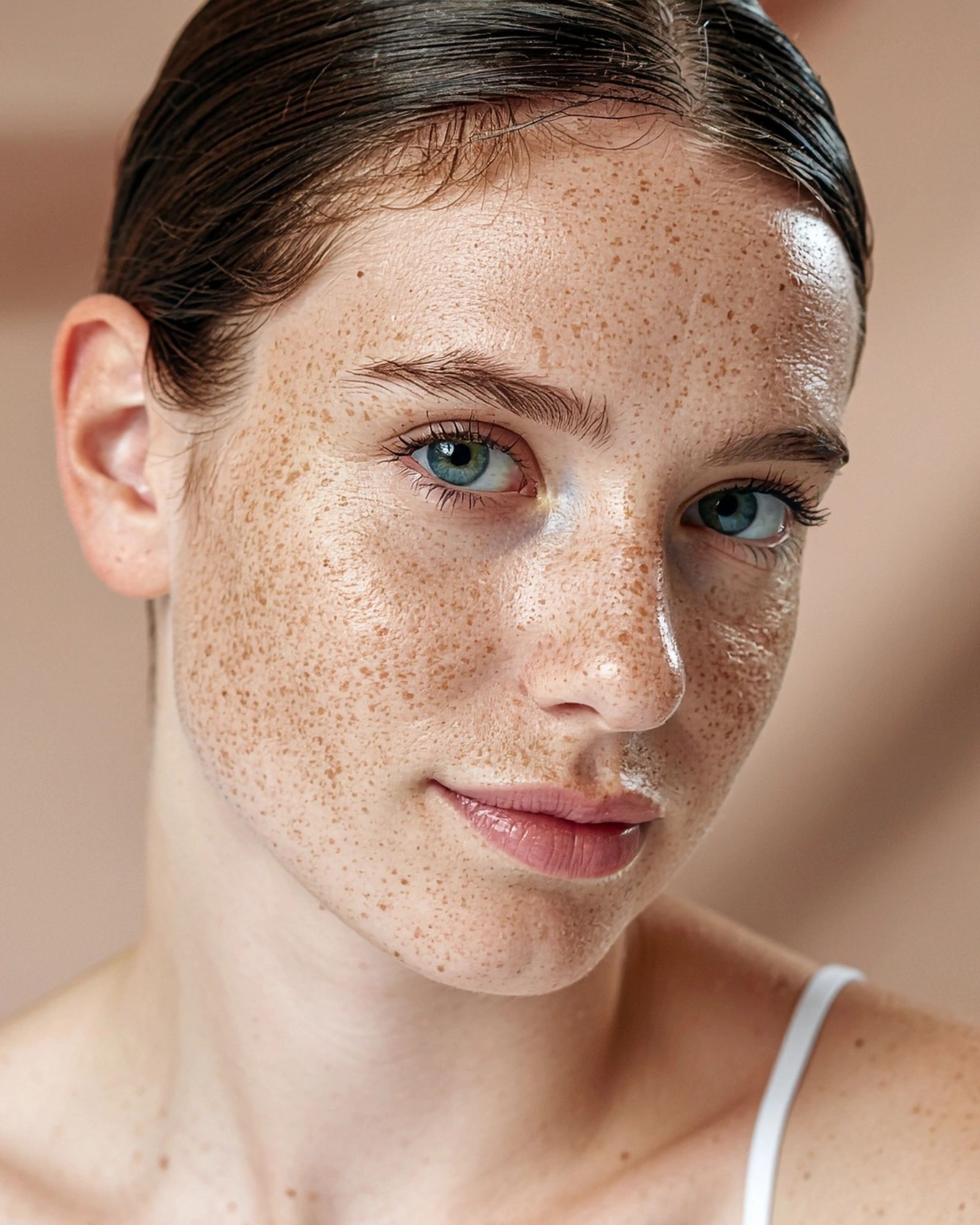
I hear this almost every week.
Someone comes in pointing at dark spots on their face and says "I have melasma."
Sometimes they're right.
Sometimes they have hyperpigmentation.
Sometimes they have both.
These two things are not the same. And treating them the wrong way — or treating melasma like regular hyperpigmentation — is exactly why so many people feel like nothing works for their dark spots.
Let me break it down simply.
What is hyperpigmentation?
Hyperpigmentation is a broad term. It just means darker patches of skin caused by excess melanin production.
The causes vary:
Post-inflammatory hyperpigmentation (PIH) — dark spots left behind after a pimple, a cut, or any skin injury. The skin overproduces melanin as part of the healing process.
Sun spots — also called solar lentigines. These are flat brown spots caused by cumulative UV exposure over the years. Very common on the face, hands, and chest.
Freckles — genetic, made darker by sun exposure.
All of these fall under the hyperpigmentation umbrella.
What is melasma?
Melasma is a specific type of pigmentation disorder. It's not just dark spots — it's a pattern of brown or grayish patches, usually symmetrical, most commonly on the cheeks, forehead, upper lip, and chin.
What makes melasma different:
It's driven by hormones. Estrogen and progesterone stimulate melanocytes — the cells that produce pigment — to go into overdrive. This is why melasma is so common during pregnancy, while on birth control, or during hormonal changes.
It's also triggered by UV exposure AND visible light. This is the part most people miss. Regular sunscreen blocks UV. But melasma can be triggered by visible light too — which is why tinted SPF with iron oxides is essential, not optional.
And it lives deeper in the skin than regular hyperpigmentation. Which is why surface-level treatments often don't work on melasma.
Why does the difference matter for treatment?
Post-inflammatory hyperpigmentation and sun spots respond well to treatments that accelerate cell turnover and fade surface pigment — retinol, vitamin C, and certain laser treatments.
Melasma needs a different approach entirely.
Because melasma is hormonally driven and lives deeper, you have to work at multiple levels simultaneously:
In the clinic: our Discovery Pico Plus laser shatters pigment without generating heat — critical because heat actually makes melasma worse. Other lasers can trigger a rebound flare if they're too aggressive.
At home: the ZO Skin Health Pigmentation Protocol suppresses melanocyte activity between sessions. It's not just about fading what's there — it's about stopping new pigment from forming.
Daily: tinted SPF 50 every single morning, rain or shine, indoors too. UV and visible light are the main triggers. Block both.
How do you know which one you have?
Honestly? Come in and let us look at it.
Melasma has a very specific appearance — symmetrical patches, often with a blurred edge, in hormone-sensitive areas of the face. A trained eye can usually identify it immediately.
Sun spots and PIH look different — more defined edges, often random placement, directly connected to a specific trigger.
Treating melasma like sun spots — or vice versa — wastes time and money and can make things worse.
Getting the right diagnosis is the first step to actually fixing it.
— Sharona Get Glowing
100+ reviews on Google. All five stars.
If you want in → Click here
P.S. Know someone who'd love Get Glowing? Refer a friend and you both get $75. → getglowingasap.com
Ready to get glowing?
Book online in under a minute, or call and talk to us directly.
Payment plans available · Century City, Los Angeles